
Spectrum:
Self Cancellations
UX Research, Strategy and Architecture

Overview
Team: Colleen Keegan (Product Designer), Jaimee Plantinga (Product Designer), Kendra Doss (Team Lead)
My Role: UX/UI Designer, UX Researcher, Strategist
Tools: Figma, Spectrum Internal Database
Timeline: September 2023-Present (Ongoing)
Background
It All Started…
In early 2023, when the Federal Trade Commission introduced a groundbreaking proposal known as 'Click to Cancel.' Click to Cancel aims to empower customers of all businesses, regardless of size, by simplifying the subscription cancellation process to be as effortless as signing up. You can read more about the initiative here.
At Spectrum, our prevailing cancellation method has traditionally involved customers having to call our customer service team, a practice commonplace in the industry but often a source of frustration for users. Given the unique opportunity to develop an entirely new feature, our team enthusiastically embraced the challenge.

Goals
The Clients
While this project was ultimately for the customers at large, our first clients were our Spectrum stakeholders, and convincing them of the importance of the new direction. While this endeavor promises significant improvements from a user experience standpoint, it is met with apprehension on the business side, as Spectrum executives express concerns about potential customer attrition.
The Journey
Our project commenced in September 2023, as my colleague Jaimee Plantinga and I dedicated ourselves to crafting a compelling argument, devising a strategic plan, and architecting the future framework for customer-driven cancellations. Our timeline was tight, allowing us just over one month to bring our vision to fruition.
The Role
Jaimee and I were both the primary designers on this project, receiving direction from our design lead and VP.
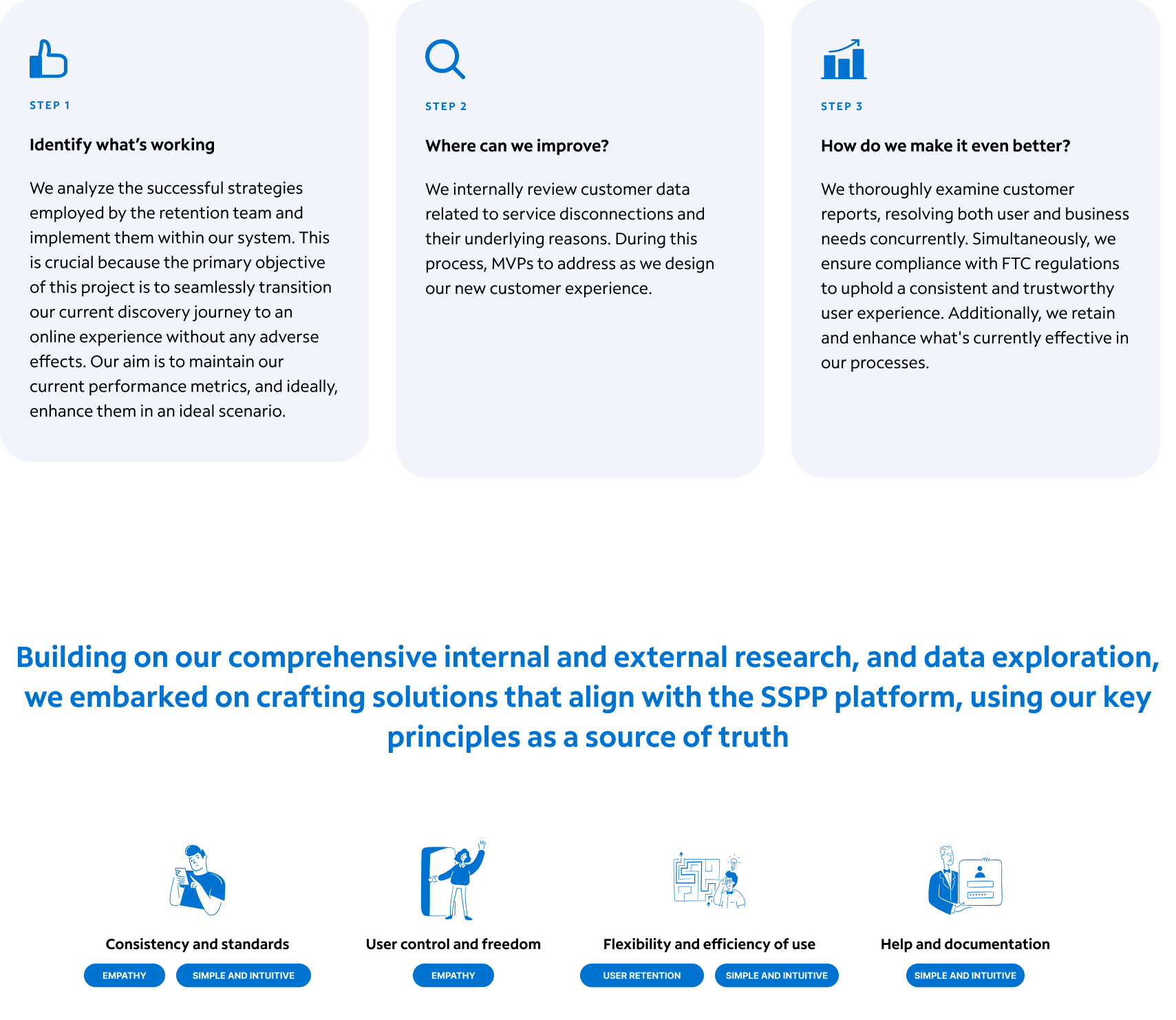
The outline for our approach to the work
Research
Understanding Why Users Cancel
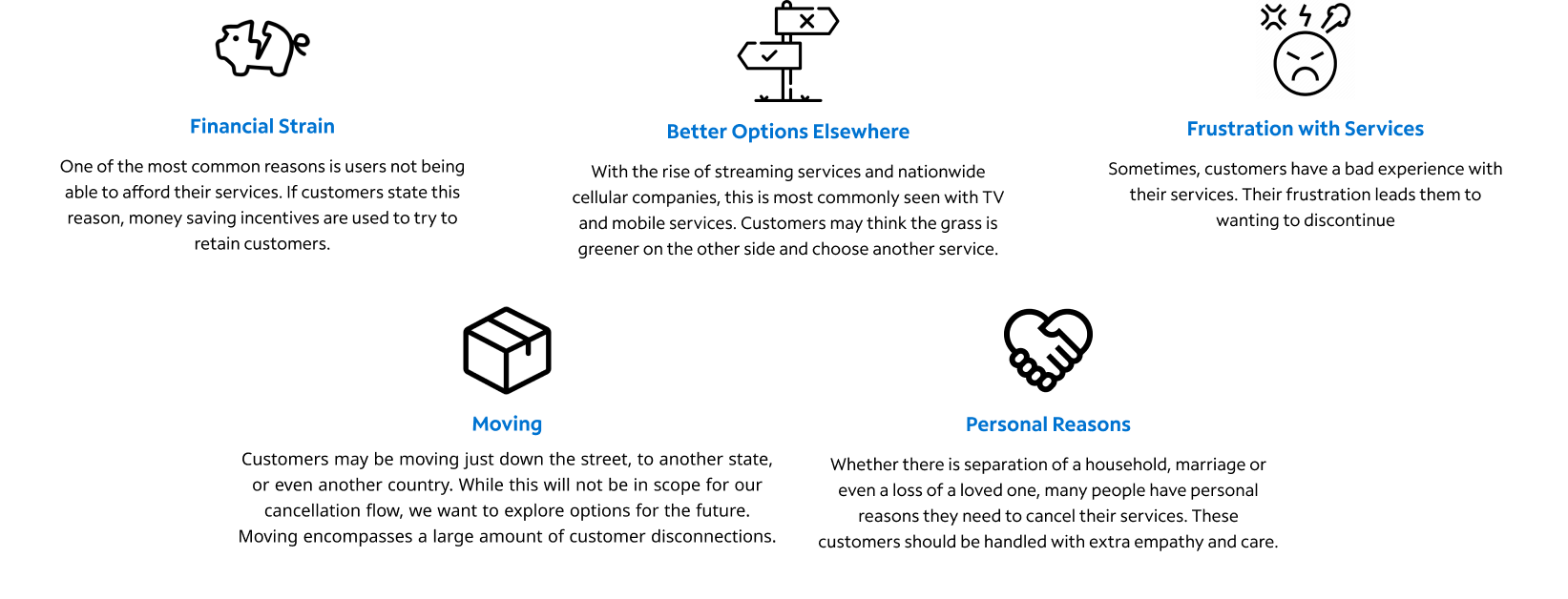
During our research, we identified five prevailing themes among the reasons for customer cancellations, which were consistent across a majority of Spectrum customers. These themes included Financial Strain, Attractive Alternative Offers, Service Frustration, Relocation, and Personal Reasons.
Voice of Customer Reviews
Using the data from Spectrums “Voice of Customer” reviews, we read a lot of complaints about associates appearing 'unpleasant' during account cancellations. Allowing customers to have an online experience allow Spectrum to ensure a consistently positive and courteous customer journey, reflected in messaging and interactions.
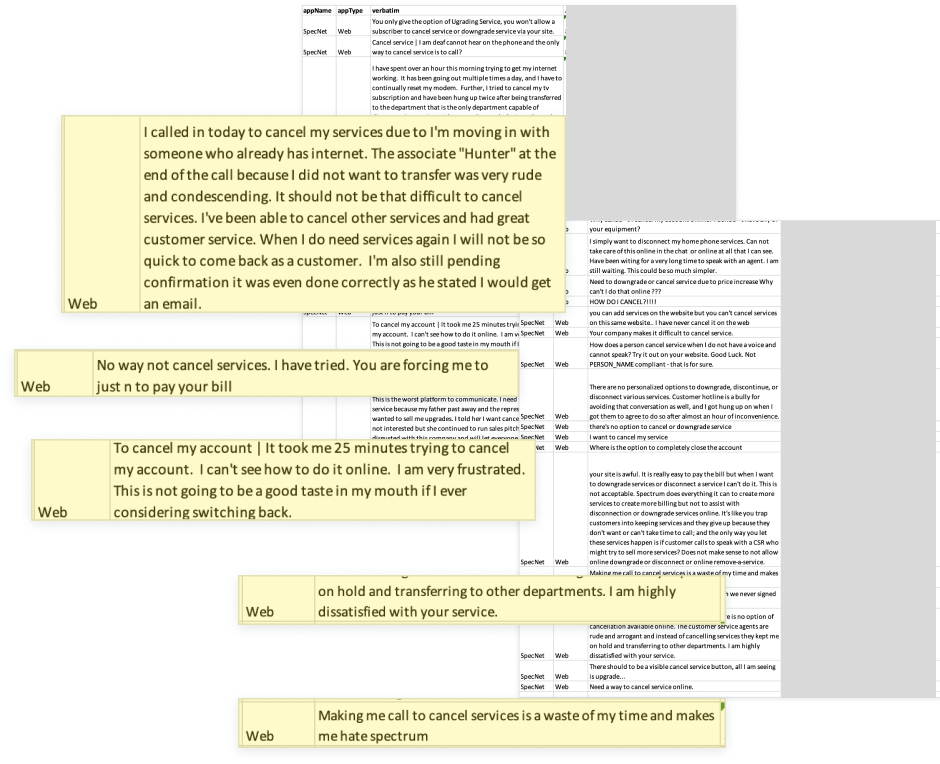
The reports also revealed that some customers experienced a sense of mistrust during the cancellation process. In specific cases, customers felt that the process misled or coerced them into retaining services they no longer wanted. Others found it to be a frustrating and time-consuming experience, potentially reducing their likelihood of returning as satisfied customers. By transitioning to a 'click to cancel' method, we empower users with greater control over their accounts, thereby enhancing trust and flexibility in their interactions with our services.
Business Research
Given the significant concerns surrounding cancellations, we undertook research to understand their potential impacts on a business, both in positive and negative terms. We also sought to explore alternative strategies that could potentially aid in customer retention, such as enabling customers to downgrade or temporarily pause their services. While we currently have some methods for addressing these scenarios, they are often limited to specific cases or still require the assistance of a customer service representative. Our findings on the topic of cancellations were truly intriguing.
While the prospect of self-cancellations, downgrades, and pauses offers promise for the future, it's essential to acknowledge that these changes can lead to current churn, potentially impacting business earnings. However, our research into allowing customers these options revealed that companies that provided such flexibility were able to retain a significant portion of their customers.
Competitive Analysis
In our examination of telecom competitors' cancellation and downgrade processes, we observed that several of them had processes closely resembling our own. However, there were notable differences in how some other businesses provided more straightforward options for their customers to downgrade their services. In the case of Spectrum, the ability to downgrade was primarily limited to mobile services, but even then, the process was convoluted and not user-friendly, making it difficult for customers to understand and access.
Common Real-World Patterns
We conducted a comprehensive examination of the various methods employed by businesses to facilitate customer cancellations. Our investigation encompassed not only telecommunications rivals but also other enterprises engaged in customer subscription services. Throughout our research, we discerned several recurring patterns:
Logical Entry
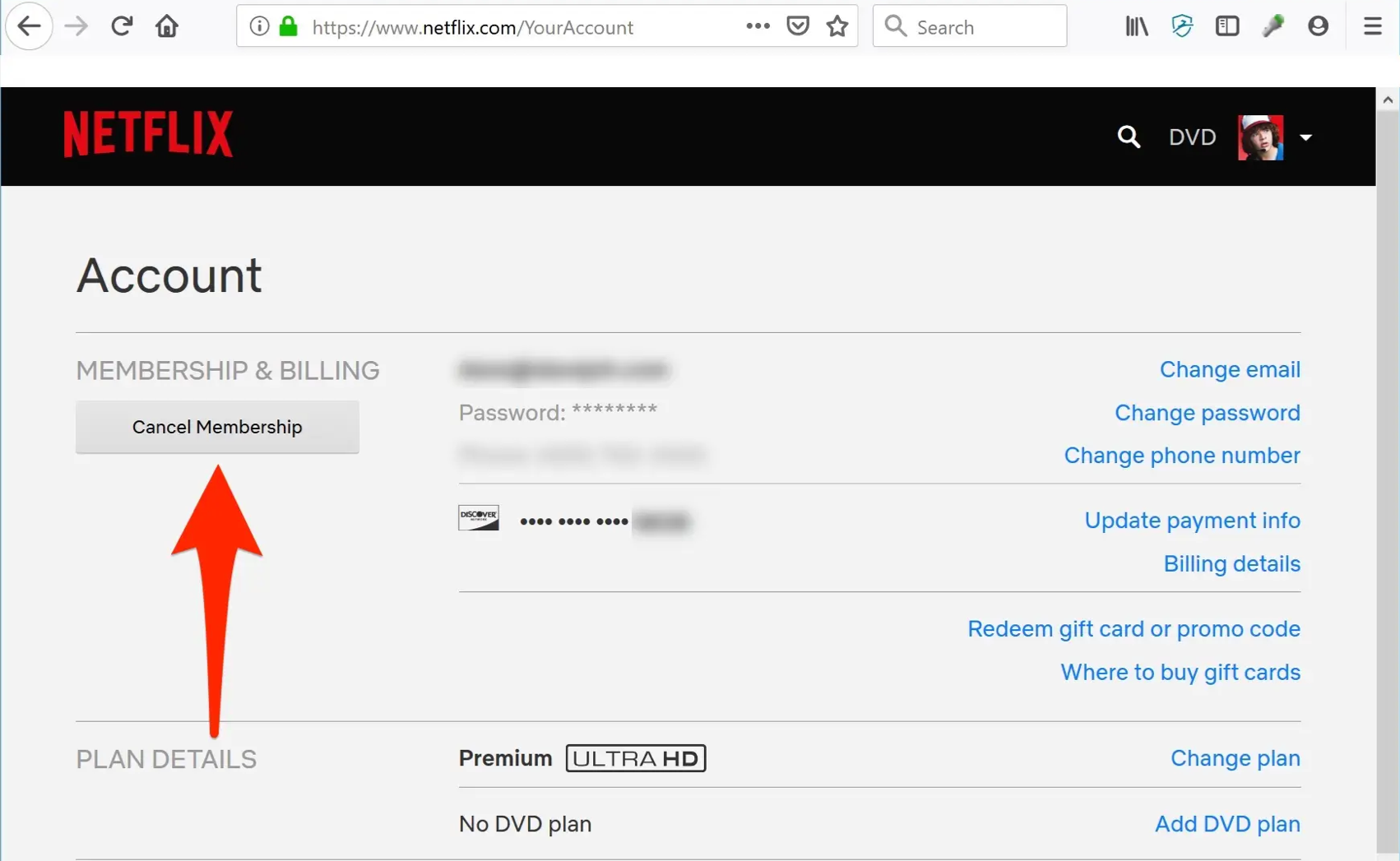
Identifying logical entry points that remained easily accessible was crucial. The best experiences put entrypoints that were in places that were where you might expect, and did not try to roach motel their users. Take Netflix’s experience for example.
Collecting Data Metrics
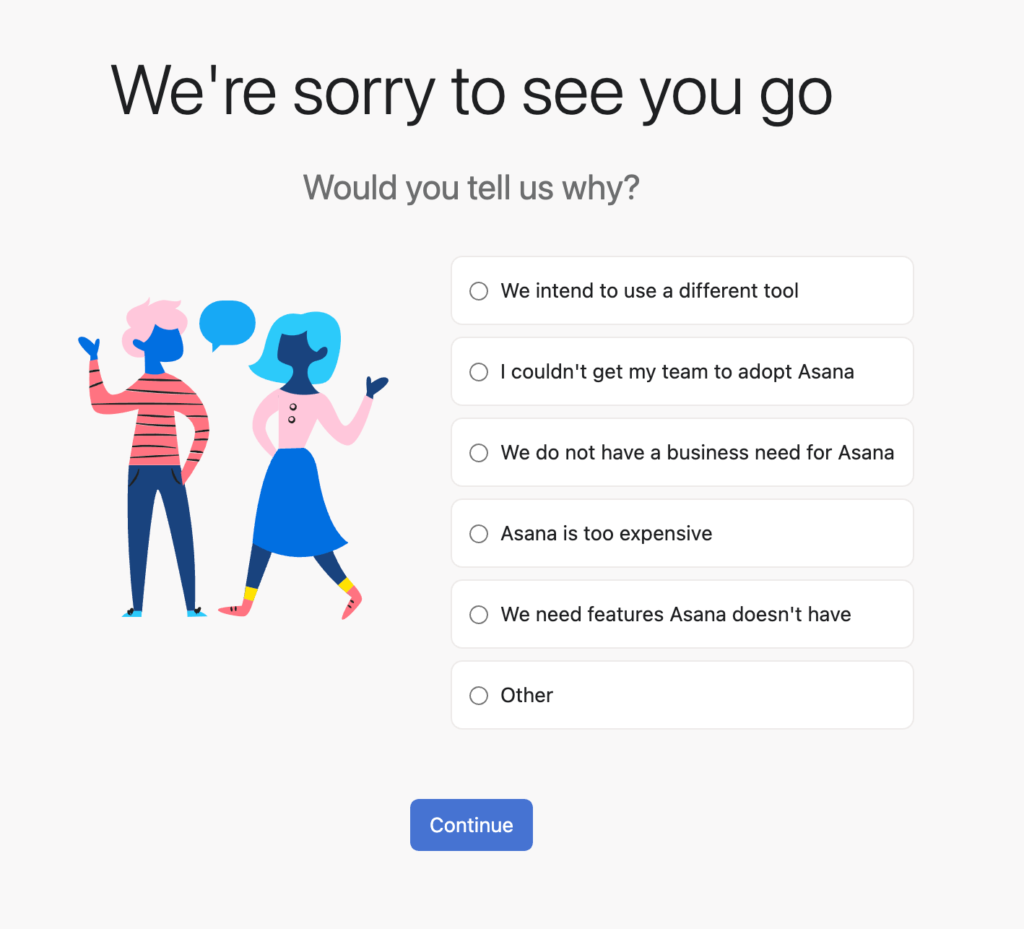
Companies are increasingly seeking to gain deeper insights into the reasons behind their customers' cancellations. Employing a concise survey is an effective method for gathering valuable information that can aid in the company's improvement efforts. By collecting data through such surveys, businesses can gain a clearer understanding of the factors contributing to the perceived loss of value, as exemplified by Asana's approach.
Offering Pause or Downgrades
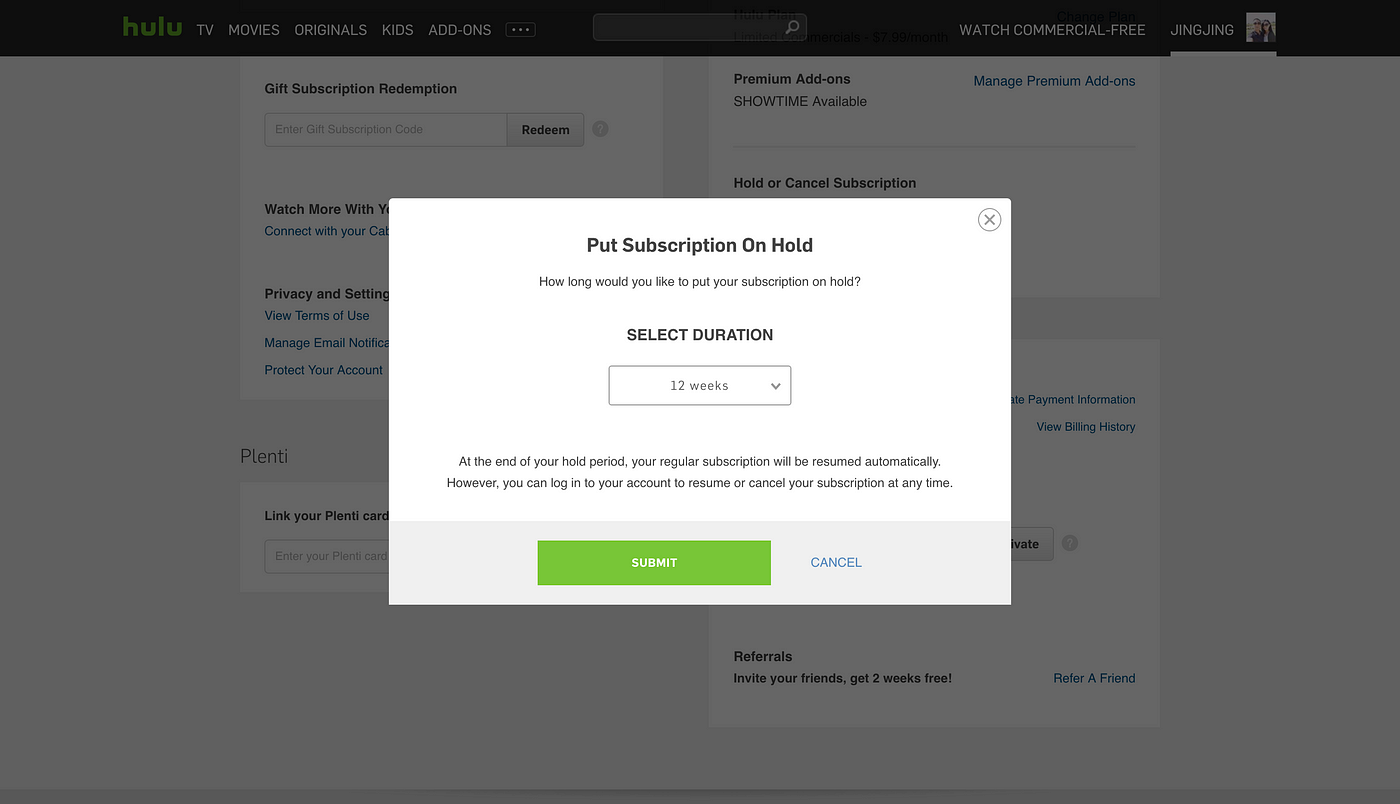
Presenting alternative options and showcasing available downgrades from the outset. Here is one example from Hulu where options to freeze were easily found. Offering downgrades and pauses also helps retain customers.
Making the process simple
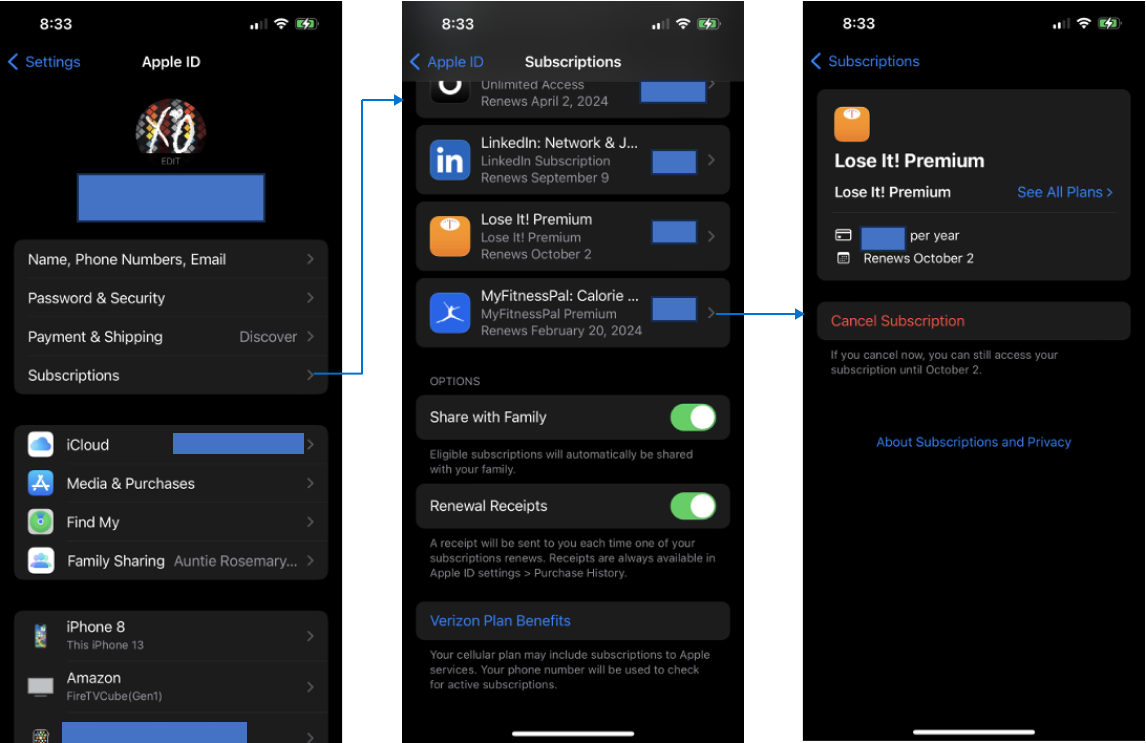
Streamlining procedures to remove unnecessary obstacles is a key element of user-friendly cancellation processes. Apple serves as an exemplary model in this regard, as they've designed their subscription cancellation flow to be incredibly straightforward, typically requiring just a few clicks to cancel a subscription.
Final Confirmation and Email
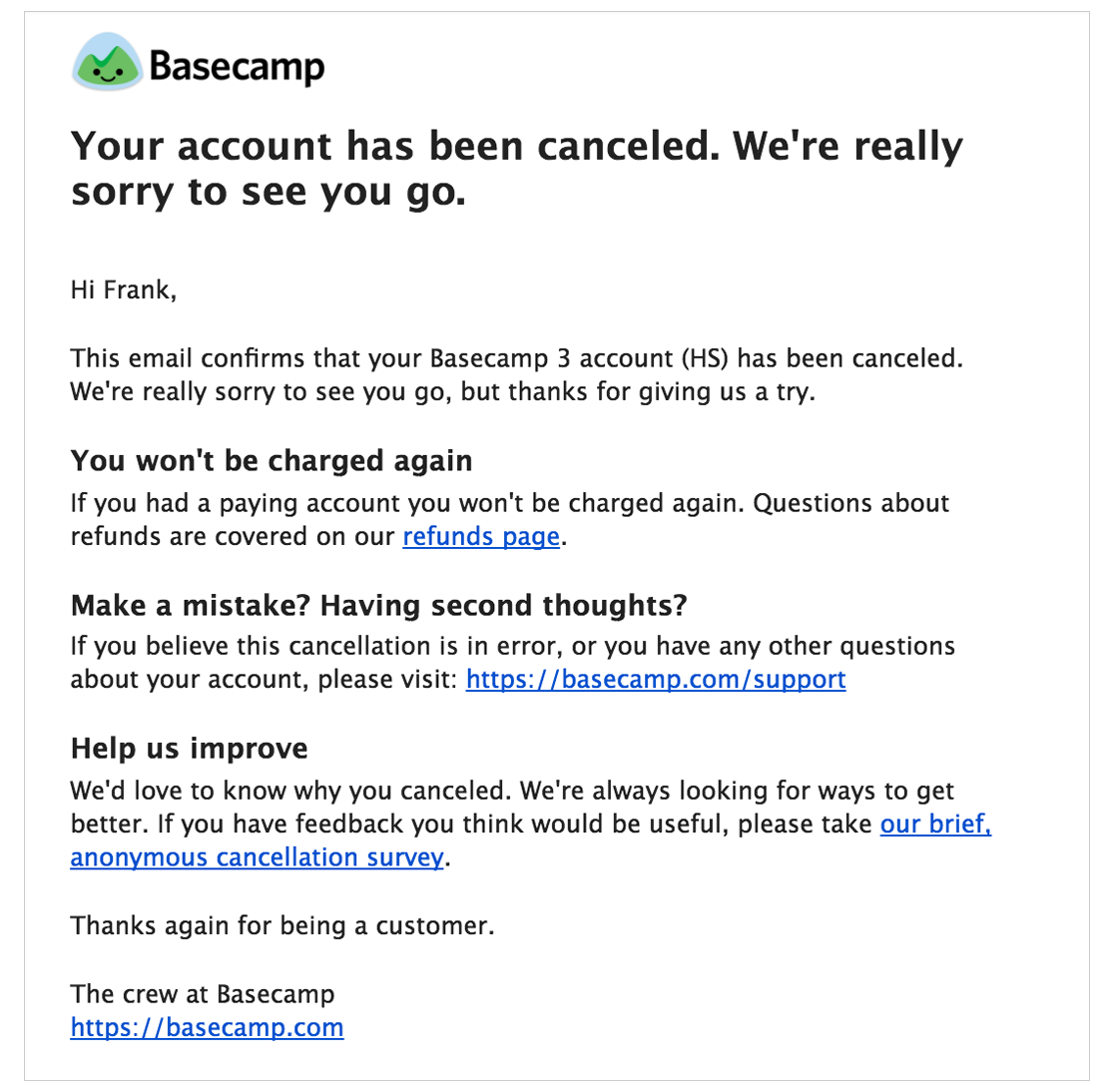
Almost all of the best experiences had a quick confirmation message at the end of the cancelation flow. Many of them also sent a confirmation email as well, while only some also added a link to reinstate their subscription. Here is an example email from Basecamp.
The insights derived from these examples played a pivotal role in refining the essential UX principles that guided our approach. Our primary goal was to uphold customer trust and satisfaction while effectively addressing the objectives and concerns of our business endeavors.
Furthermore, our research provided us with abundant information demonstrating that granting customers control over their services not only fostered a more positive perception of the business as a whole but also significantly increased the likelihood of customers returning to resume services at a later time.
Internal Research
A good portion of our research was based on Spectrums own internal retention processes and tools. We wanted to get a deeper understanding of this so we could better bring the retention process to life digitally, without compromising on the goal to give customers a simple disconnect avenue.
There was a lot of understandable concern around retaining customers. Concerns raised from the business concerned about losing the value of the human experience that helped keep customers. We wanted to get a better understanding of our retention team to emulate some of their behaviors in the digital experience without losing the rate of retention. Our Retention team has a stellar rate of retention, with an average of 70% of customers saved from disconnecting services. With a number of tools to use, retention agents have to be great listeners and empathize with the customer to understand what offers will really appeal to them.
The Retention Timeline
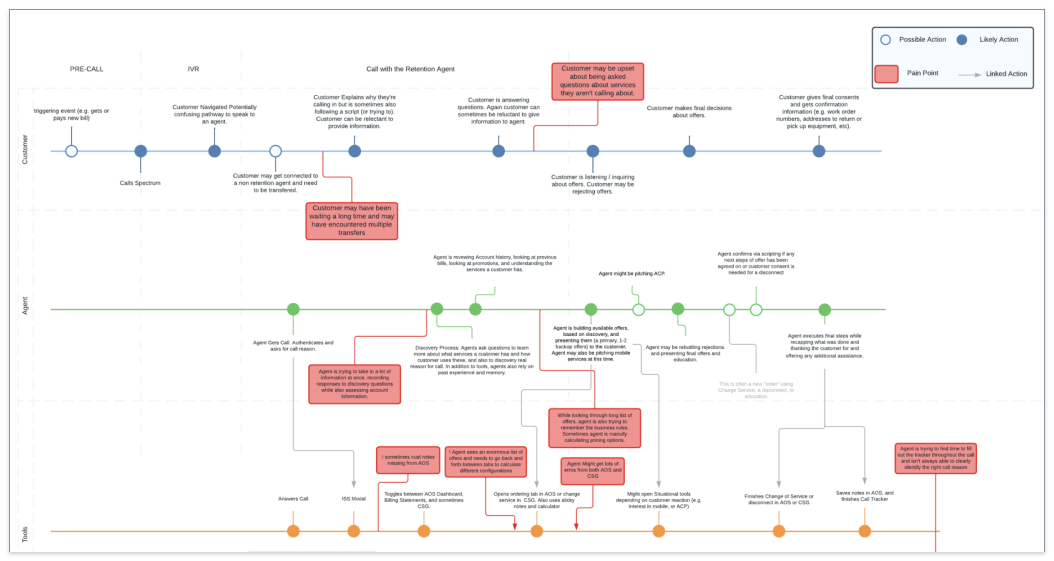
Our UXR team had done extensive research of retention, where they had gone as far as breaking down the steps that the customer, agent, and tech all go through at the same time. this was a great resource for us to follow, as it helped us understand at which point retention made certain moves to try to incentivize customers to stay.
Ideate
With all the rich information gathered from research, we began to define the problems and brainstorm feasible solutions we could bring to the platform to make it function and feel better to users. We took what we learned from customer feedback, retention, and our own personal research to create guiding principles for our designs to follow.
User Matrix
Following our in-depth explorations, we gathered a compilation of prevalent UX themes, carefully tracking their occurrences throughout our research. Subsequently, we distilled this extensive list into three overarching themes that we have identified as paramount for our redesign efforts: Empathy, Simplicity and Intuitiveness, and Sustaining User Retention.
A Vast Web of our Research Findings and Goals
Usability Heuristics
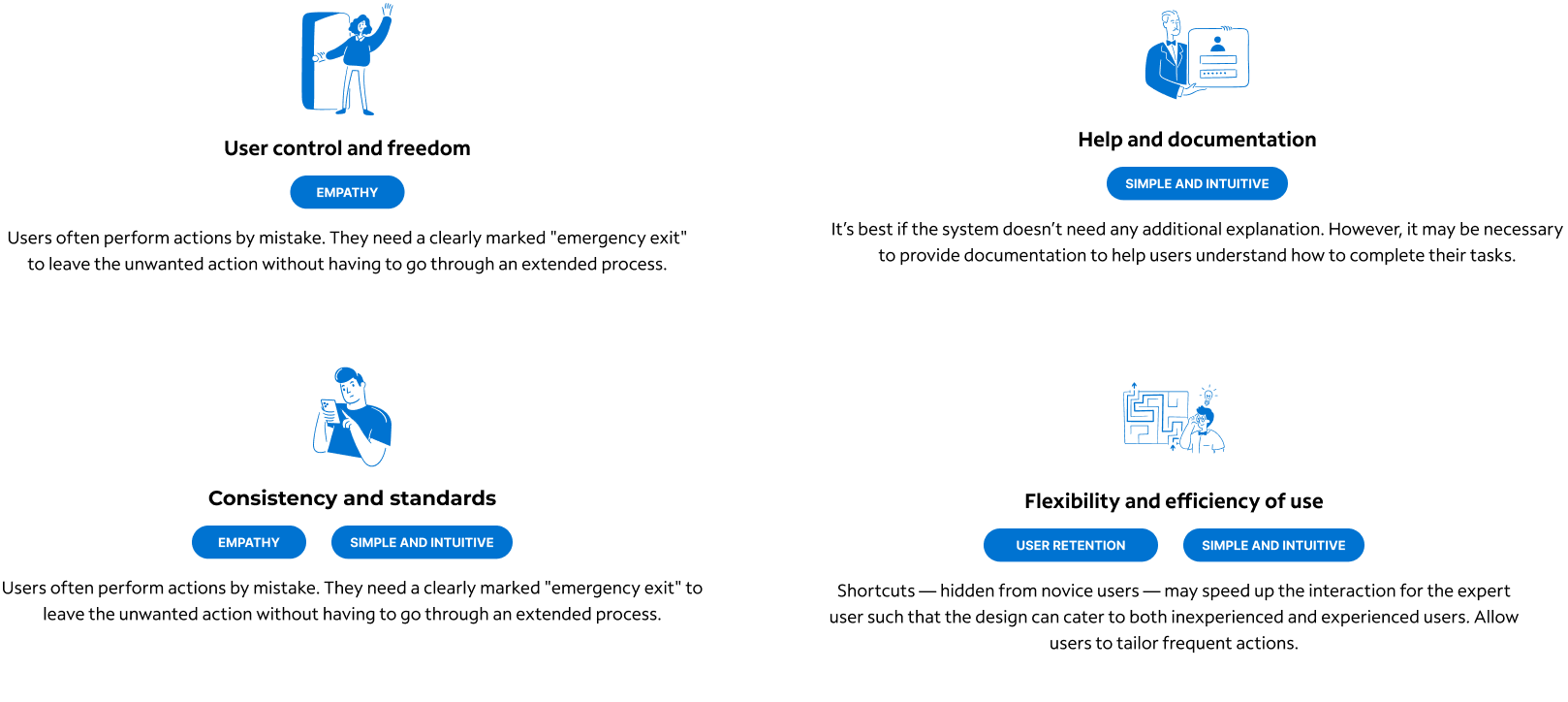
Once we delved into the realm of UX themes, our investigation led us to Jakob Nielsen's 10 usability heuristics. Among these, we identified four heuristics that align seamlessly with our specific use case. We then aligned each of these heuristics with one of our core UX themes, creating a cohesive framework for our design approach.
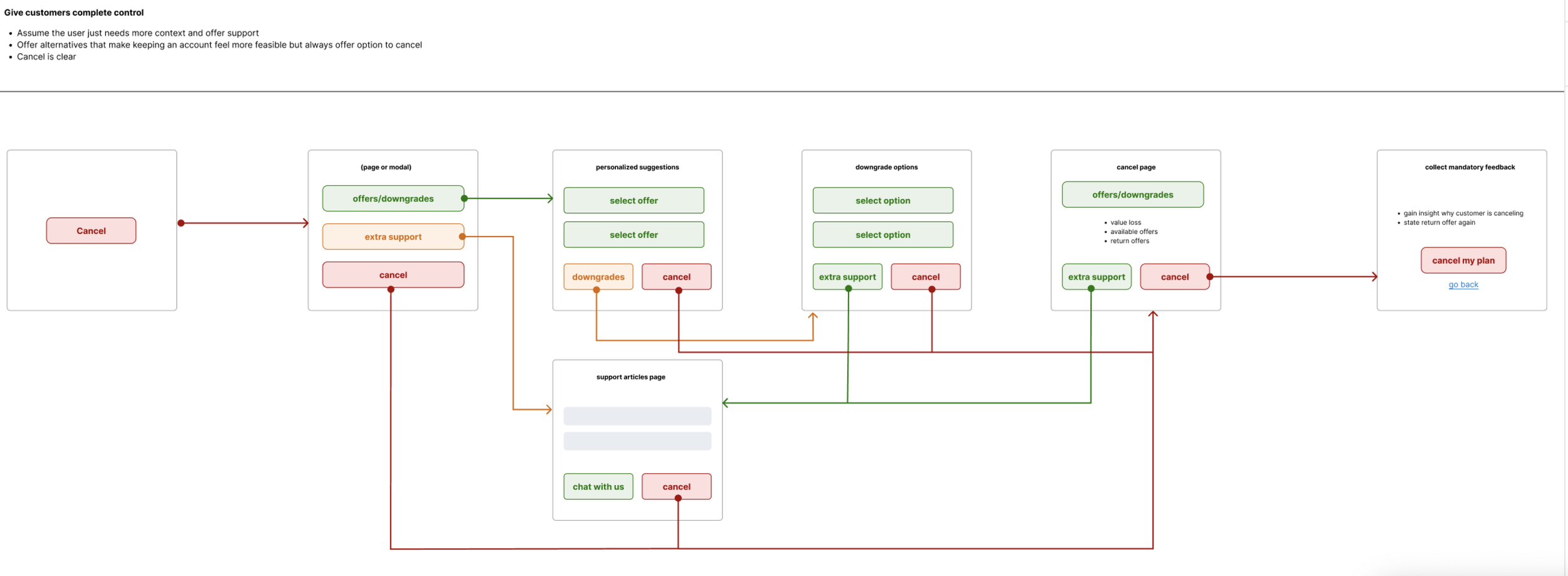
User Journeys
By creating multiple user journeys aligned with the five primary reasons for cancellations, we gained valuable insights into our customers' experiences. This approach enabled us to achieve a deeper understanding of the underlying reasons behind cancellations and allowed us to collect data that helped prioritize the most impactful issues that needed to be addressed as a priority.
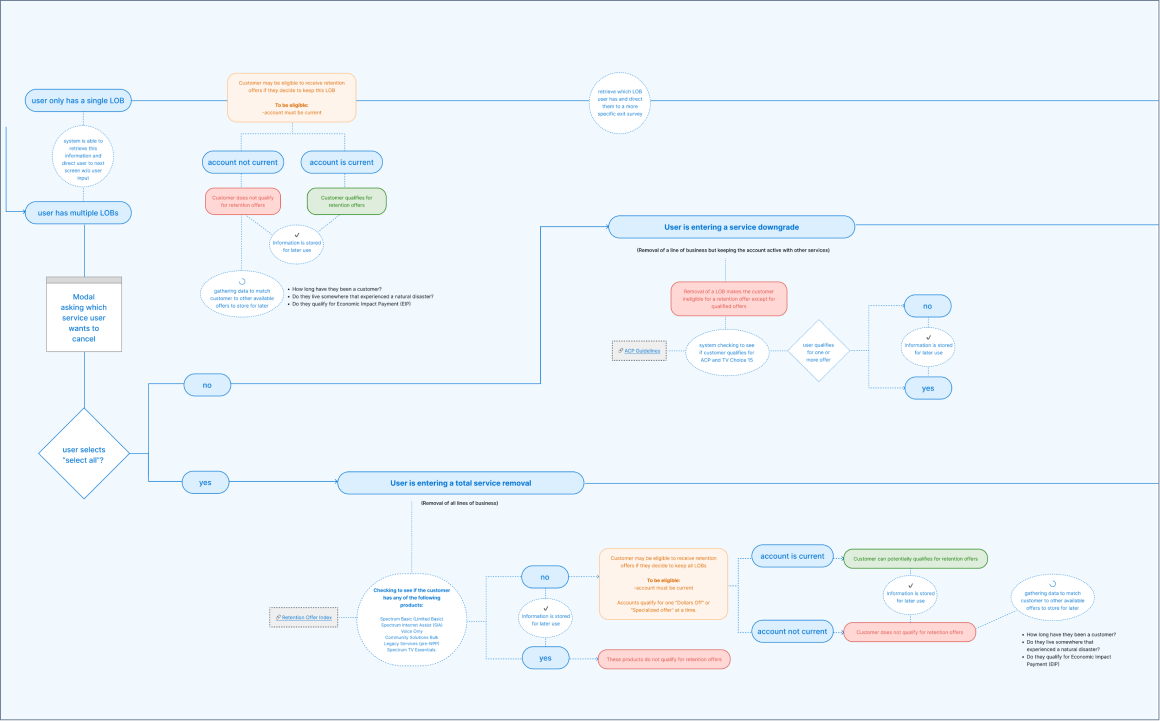
Digital Journeys
Following the collection of extensive data from our research and collaboration with the User Experience Research (UXR) team, we proceeded to construct a comprehensive user flow. This encompassed all the necessary components, not only from the front stage (touch points, channels, user interfaces) but also delving into the back stage aspects (technology, systems, policies, processes).
Card Sorting
Design
Wireframes
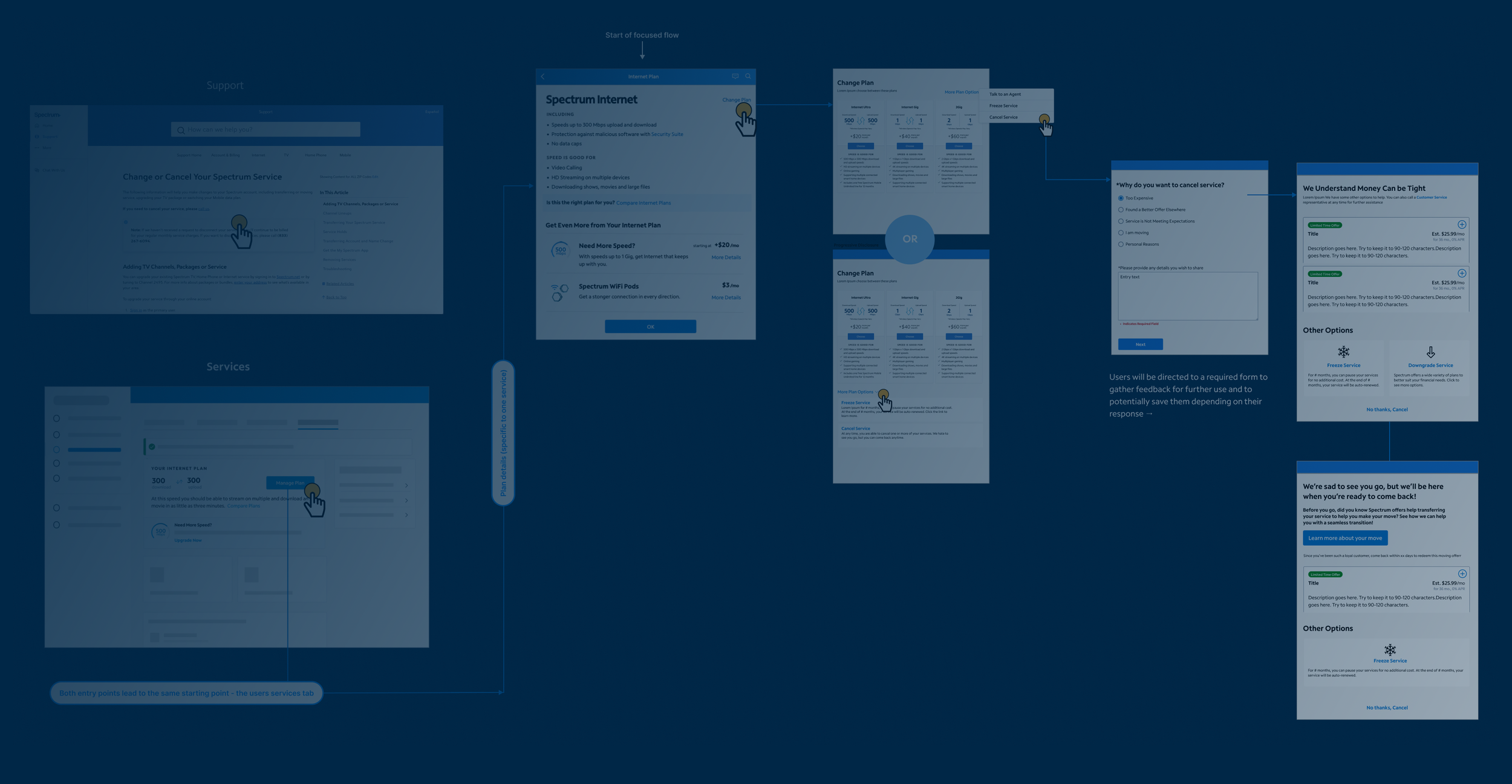
Based upon our initial findings around customers reasons for canceling, we created a series of wireframes, each depicting the different scenarios and how they would need to be handled uniquely. Our knowledge from the UXR team on retention practices helped us to emulate some of their behaviors in our flows.
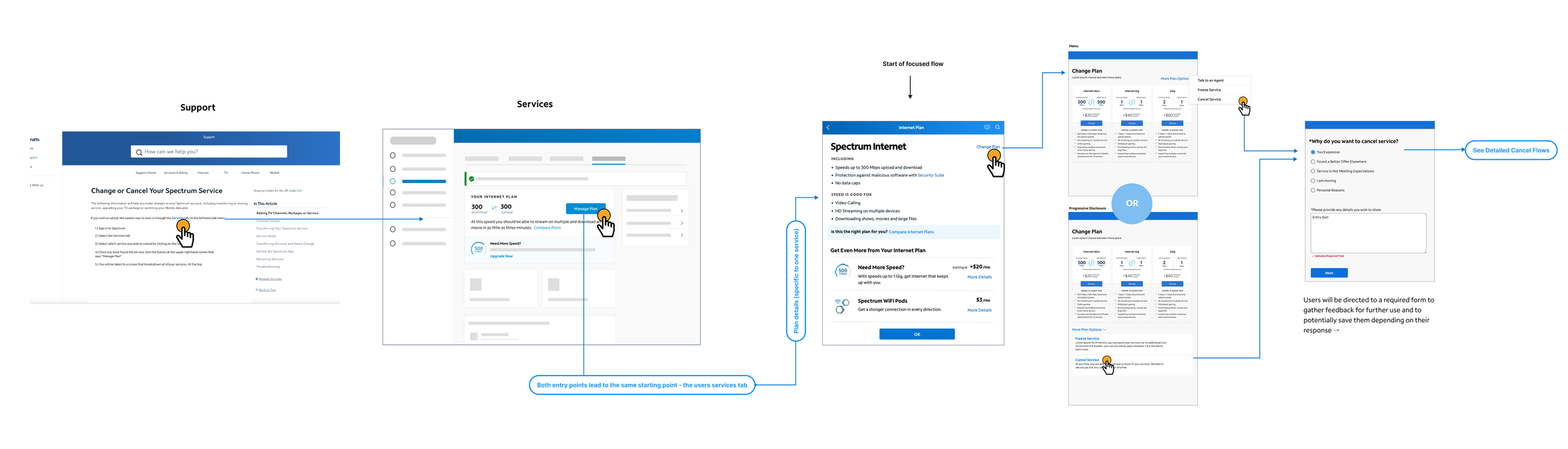
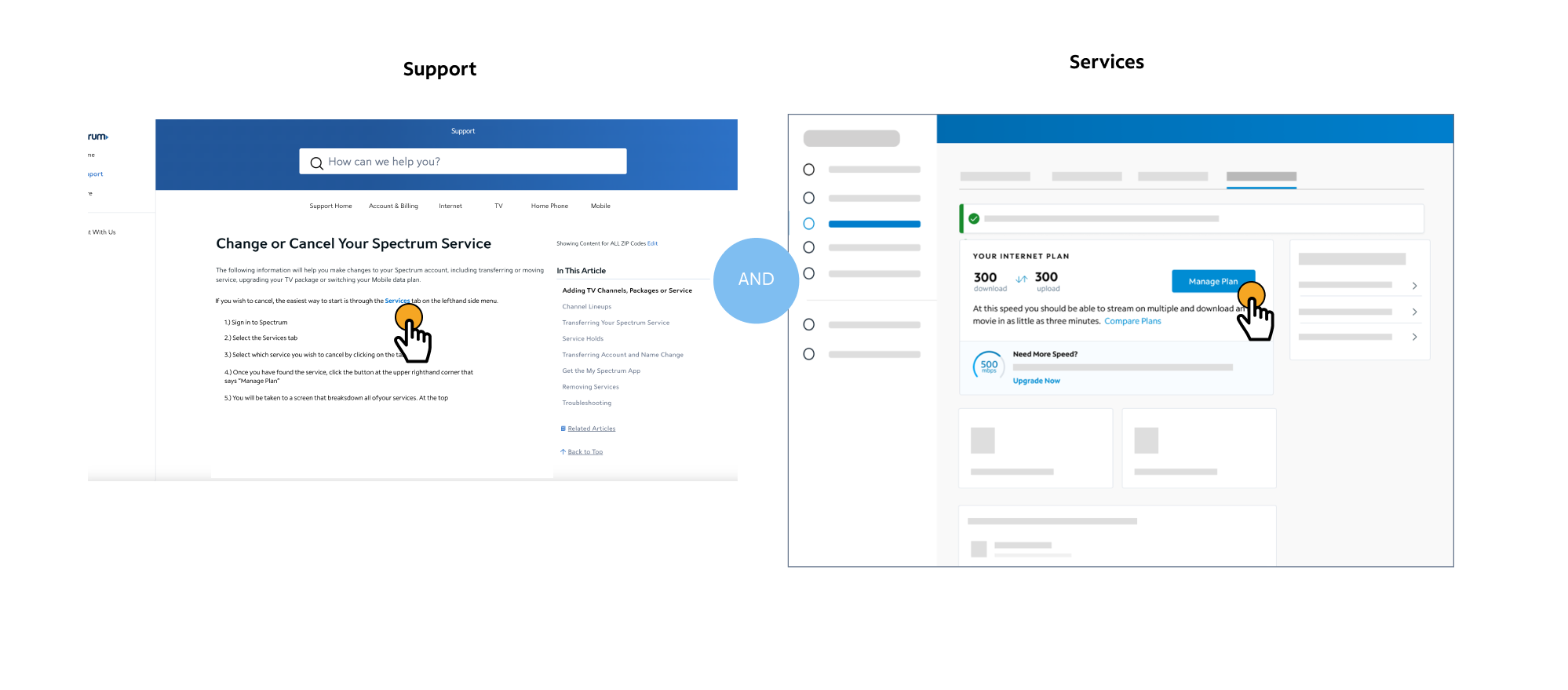
Entry Points
While this will require future testing, our initial thoughts were that the most logical entry points would be in services and support. We had also considered having entry points in a users plan details.
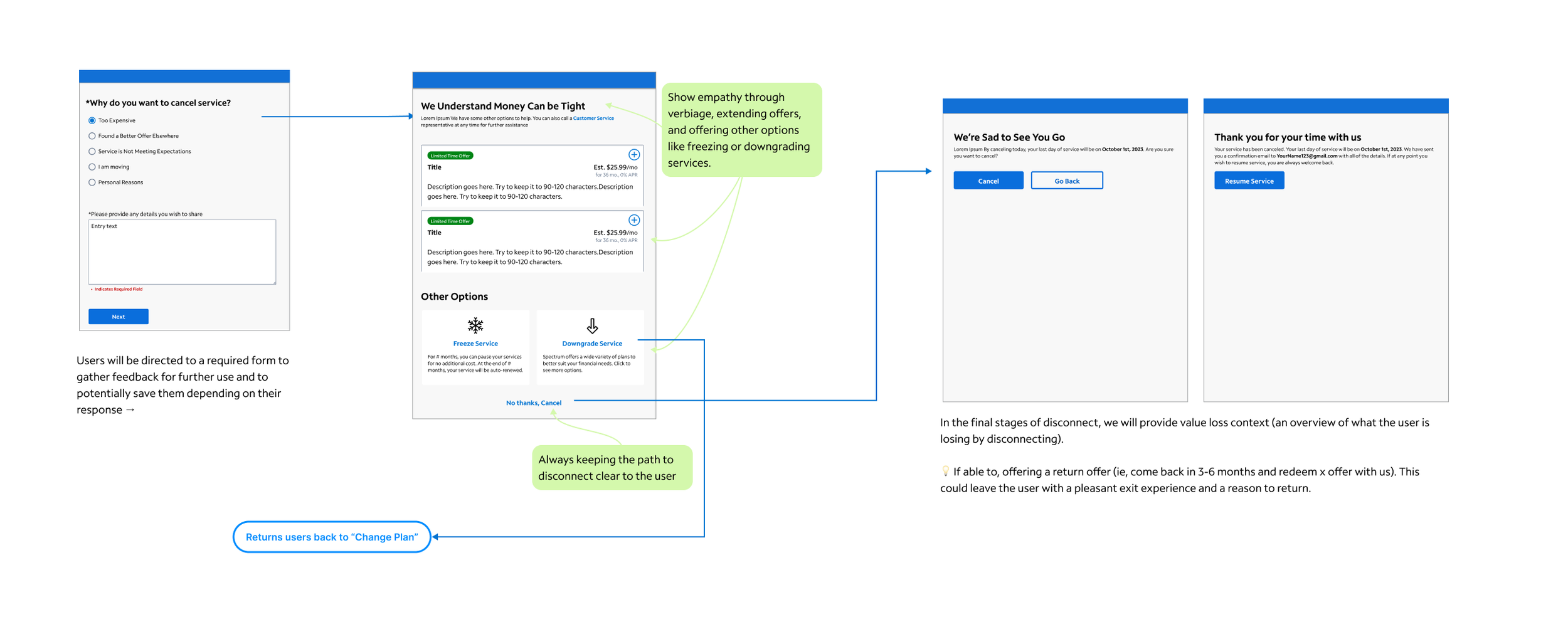
Concern with Cost
Cost is undeniably one of the primary drivers behind service cancellations. Our aim was to provide customers with alternative cost-saving choices and the flexibility to freeze their accounts. Importantly, we've ensured that the cancellation process remains easily accessible, with minimal obstacles in the way.
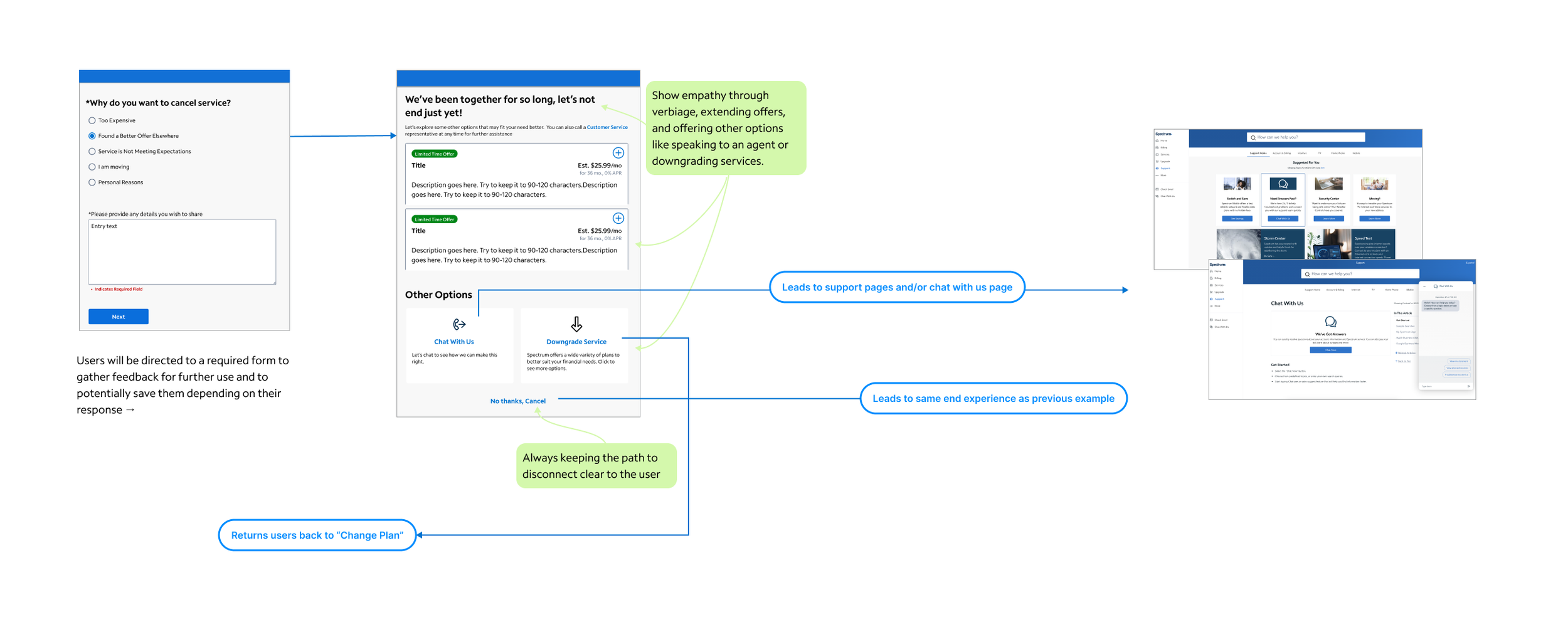
Competitive Offers
There are more options than ever when it comes to TV, Internet, and streaming services. While this flow is similar to cost cutting, it differs slightly in the offers we parse for individuals.
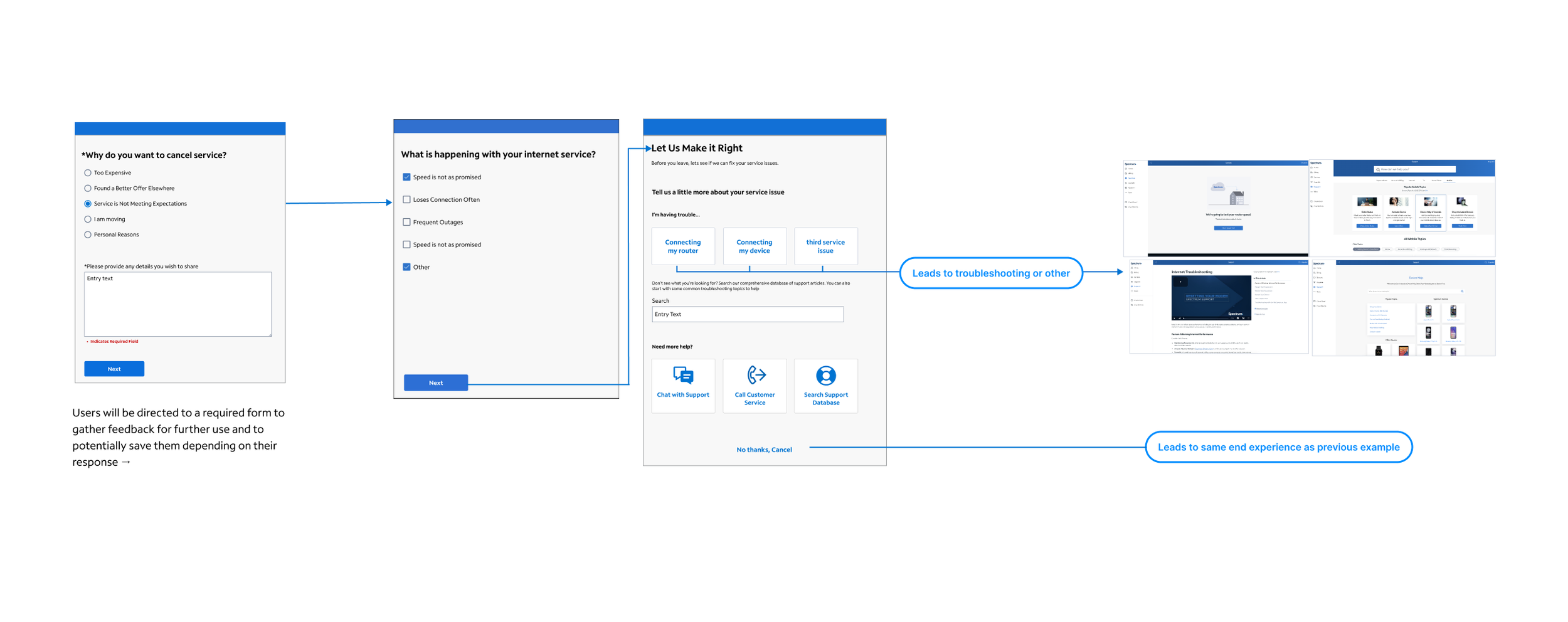
Frustration with Service
This flow gets slightly more complicated as we require additional information to guide users to their intended destination and possibly obtain further assistance. Notably, this is the sole flow where we prioritize engaging with an agent as the primary option. Nevertheless, similar to the other flows, reaching the cancellation option remains straightforward from this point.
Moving and Personal Reasons
In our preliminary investigation, we focused on addressing relocations and personal matters. For customers facing a move, we have existing features in place, allowing for a seamless transition by simply redirecting them from the cancellation flow to the relocation experience. However, when it comes to cancellations due to personal reasons, the process is more intricate, necessitating extensive research and deeper user insights. While we recognize the undeniable importance of these features, we chose to prioritize Cost, Competitive Offers, and Service Frustration for our MVP (Minimum Viable Product).
Next Steps
Following our review of the findings with our director, the research will be elevated to the executive level for in-depth discussion. Our presentation, research, and strategy recommendations will undergo comprehensive scrutiny, ensuring that Spectrum is well-prepared for compliance with FTC guidelines. Anticipated discussions around this topic will be pivotal, and it will be intriguing to witness the direction it takes in the future when the time is right. This preliminary work lays the foundation for the company's readiness to embark on the next steps for the future.
Lessons Learned
In Product Design, maintaining a harmonious equilibrium between customer goals and business objectives is a constant necessity. Throughout my tenure of three and a half years at Spectrum, I have encountered numerous projects, but none demanded as delicate a balancing act as this one. The introduction of the Click to Cancel initiative elicited strong, mostly unfavorable sentiments from executives. However, with our deep dive into Self Cancellations, it was later met with a much better outlook. During this period, I gained valuable insights into approaching sensitive business subjects with tact and finesse while effectively conveying the significance of prioritizing the customer experience.